


IS YOUR COMMUNITY READY?
Georgia HOA requirements are changing January 1, 2027
Georgia's Property Owners' Bill of Rights Act introduces significant changes for owners' associations beginning January 1, 2027.
We've created a straightforward checklist to help your board identify some of the areas it should review before the changes take effect.
Georgia Community Association Readiness Checklist
-
Under the new law, your association can elect not to register with the Georgia Secretary of State—but that decision comes with significant limitations.
A nonregistered owners' association cannot assess or collect fines, fees, or accelerated assessments. And associations must be registered to collect fines or fees, file or record liens, or initiate foreclosure proceedings.
If your association registers, you'll need to submit your governing documents and a recent financial statement, renew your registration annually, and report certain material changes within 30 days.
Your next step: Make sure your board understands both options and their consequences before deciding whether to register.
-
While most of the new law takes effect January 1, 2027, the attorney-fee provisions took effect July 1, 2026, for actions filed on or after that date.
Those provisions establish additional notice, cure-period, and itemization requirements before attorney's fees may be collected or awarded.
Your next step: If your association hasn't already done so, ask your association counsel to review your current attorney-fee procedures now.
-
Under the new law, registered associations must maintain records relating to assessments, fines, fees, liens, and foreclosures for at least 10 years.
That means your board needs to think beyond where records are stored today. You need a consistent way to make sure important association records are preserved and remain accessible as board members, management companies, and other professionals change over time.
Your next step: Review your current record retention practices and make sure your association has a process for preserving the required records for at least 10 years.
-
The new law gives homeowners the right to inspect and obtain association and accounting records upon written demand, subject to Georgia law and your governing documents.
That includes specified financial information such as finalized balance sheets, budgets, profit-and-loss statements, and bank statements for the previous three years.
Your next step: Think through what would happen if a homeowner submitted a written records request tomorrow. Do you know where the records are, who is responsible for responding, how they would be provided, and how long it would take to respond?
-
Clear communication becomes even more important when notice and access are part of homeowners' statutory rights.
The new law addresses reasonable notice of member meetings and the right of owners to attend member meetings, which must be held at least annually.
Your next step: Review how your association sends meeting notices and maintains records of those communications.
-
Beginning January 1, the order matters.
Owner payments must be applied first to regular dues, followed by special assessments, specific assessments, and then other fees and fines.
The law also prohibits associations from refusing an owner's payment in any amount for an assessment or assessing or collecting accelerated assessments.
Your next step: Confirm that the people and systems handling your association's accounting will follow the required payment order.
-
Under the new law, a resident claiming harm from an association's action or inaction can file a complaint with the Georgia Secretary of State within 180 days of the alleged action or inaction.
A complaint can also automatically pause collection of fines or fees that are the subject of, or related to, the complaint while the statutory process is underway.
That's when being able to reconstruct what happened becomes especially important.
Your next step: Ask whether your board can readily determine what decision was made, when it was made, what was communicated, and what information supported it.
-
The new law changes foreclosure procedures, including the notice period and delinquency threshold, and excludes certain assessments, fines, and fees from the calculation used to determine the foreclosure threshold.
Your next step: Ask your association counsel to review your current procedures before January 1.
You don't need to become an expert on a new law overnight. But your board should understand what's changing, know where your information is, and make sure the right processes are in place.
Use these questions to start the conversation.
Be Ready Without Adding More Complexity
The Visibility You Deserve
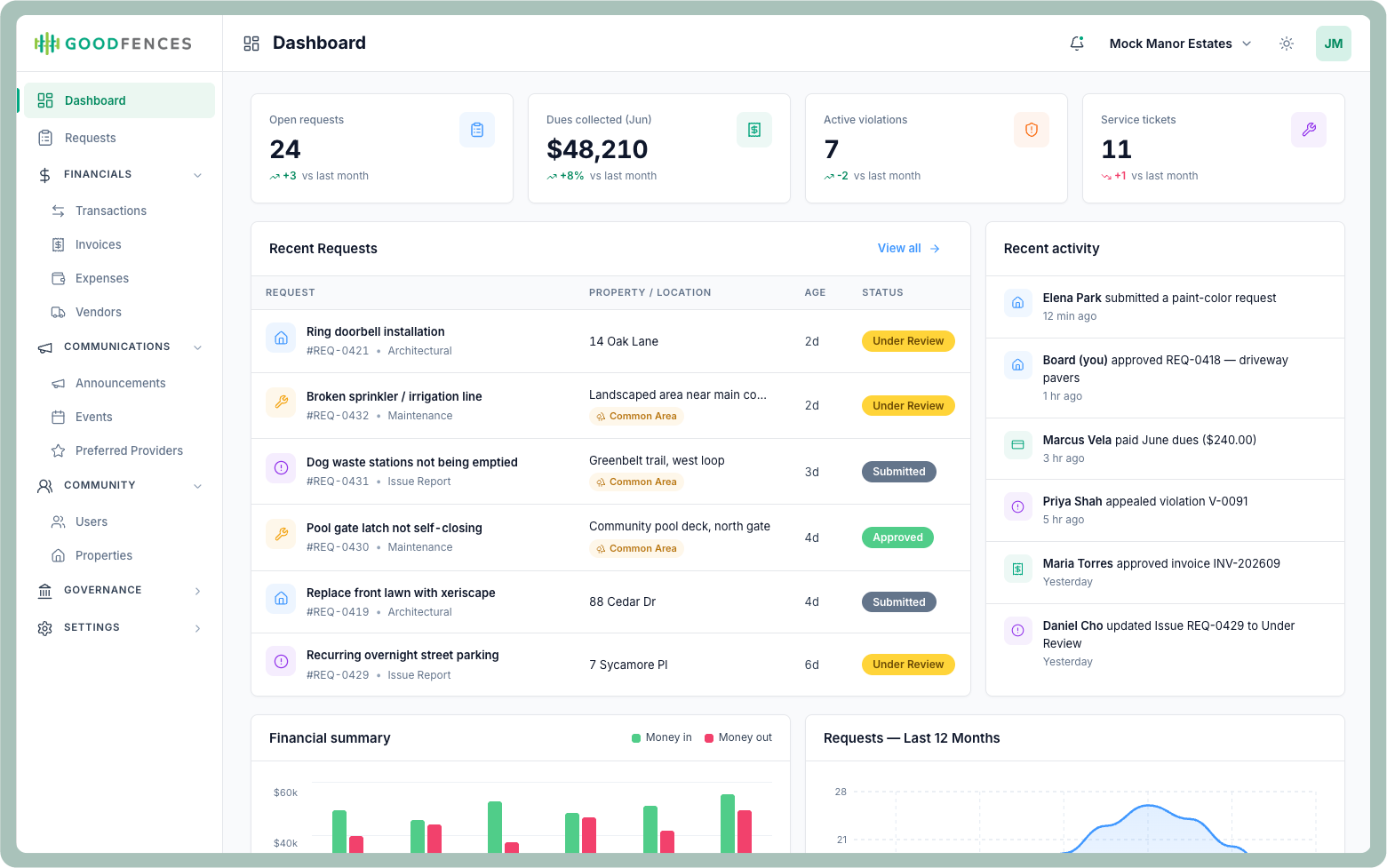
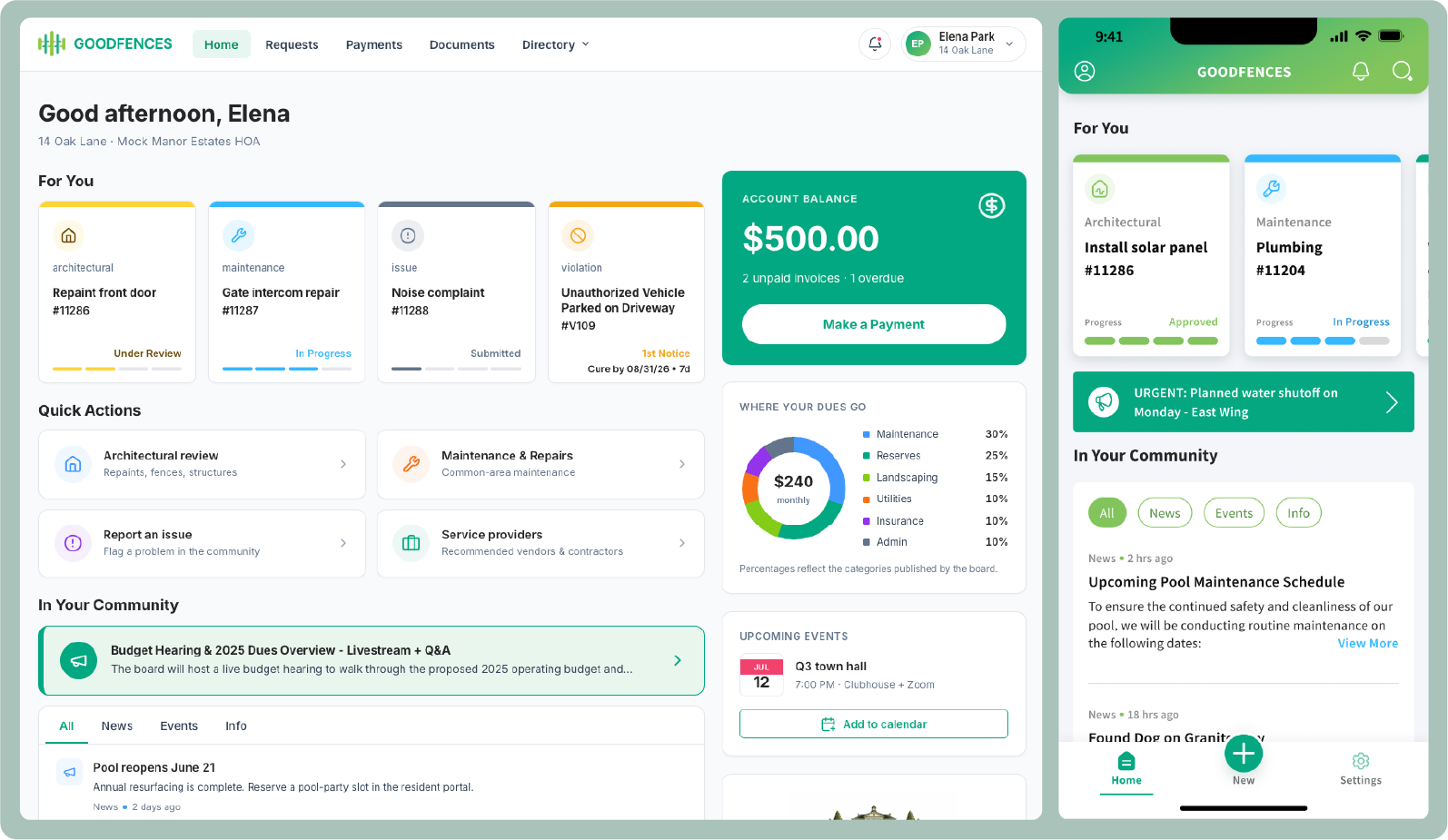
The new law puts even more importance on organized records, clear communication, accurate financial information, and knowing what's happening across your community.
GoodFences brings your community's records, communications, financials, requests, and decisions together in one place—giving your board the information it needs to lead confidently and homeowners greater visibility into their community.
